
Thermo-PU “heat-stamp darkening” PU Leather
It is common used for packaging, bookbinding, menus, gift boxes. The material with heat pressing creates a darker, embossed mark.
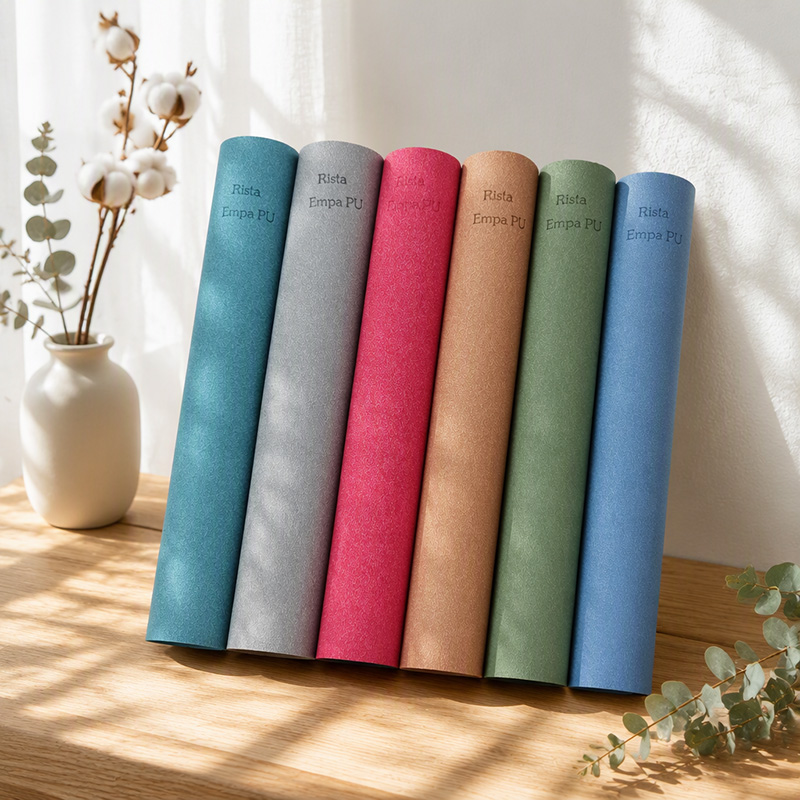
Material structure
1. Non-woven base (Nylon or Polyester composition)
2.PU surface layer with heat-sensitive color system
Production flow:
Like conventional high-quality synthetic leather, thermo-reactive PU starts with a multi-layer polyurethane structure:
1. A non-woven (nylon, polyester) gives strength and hand-feel.
2. A PU adhesive layer bonds the surface to the substrate.
3. One or more PU coating layers form the top surface, where color and texture live.
The “Reactive” Chemistry: Heat-Press Darkening System
In packaging and bookbinding grades, the PU surface is engineered to react to hot stamping. Under a heated die (typically 160–180°C), pressed areas permanently darken and deboss — for example, red becomes deep red, green becomes forest green. No printing ink is required; the pattern is created by heat and pressure alone.
Finishing & Activation
After coating and curing, the material is embossed, calendered, inspected, and rolled.
For heat-press grades, the customer finishes the material with a copper or zinc die:
1. Temperature: 160–180°C
2. Controlled pressure and dwell time
3. Copper dies give the most stable contrast
Quality & Responsibility
Good thermo-reactive PU is not just about the “wow” effect. It must also perform:
1. Consistent trigger temperature
2. Uniform color change
3. Fold, peel, and abrasion resistance
4. Lightfastness with protective topcoat
5. REACH, RoHS and other vegan compliance
6. Storage matters too: rolls should be kept dry, cool
More Than a Color Trick
Thermo-reactive PU leather is not a surface gimmick. It is a controlled interaction between chemistry and heat — turning PU material into something tactile, dynamic, and memorable. That is what lives behind the material.


 IPv6 network supported
 English
 Русский
 Español
 Português

